Category Archives: thoughts about painting

Paintings as premonitions

What makes some paintings into premonitions? Is there something in the human mind that can peer into a dim future and translate it into paint?
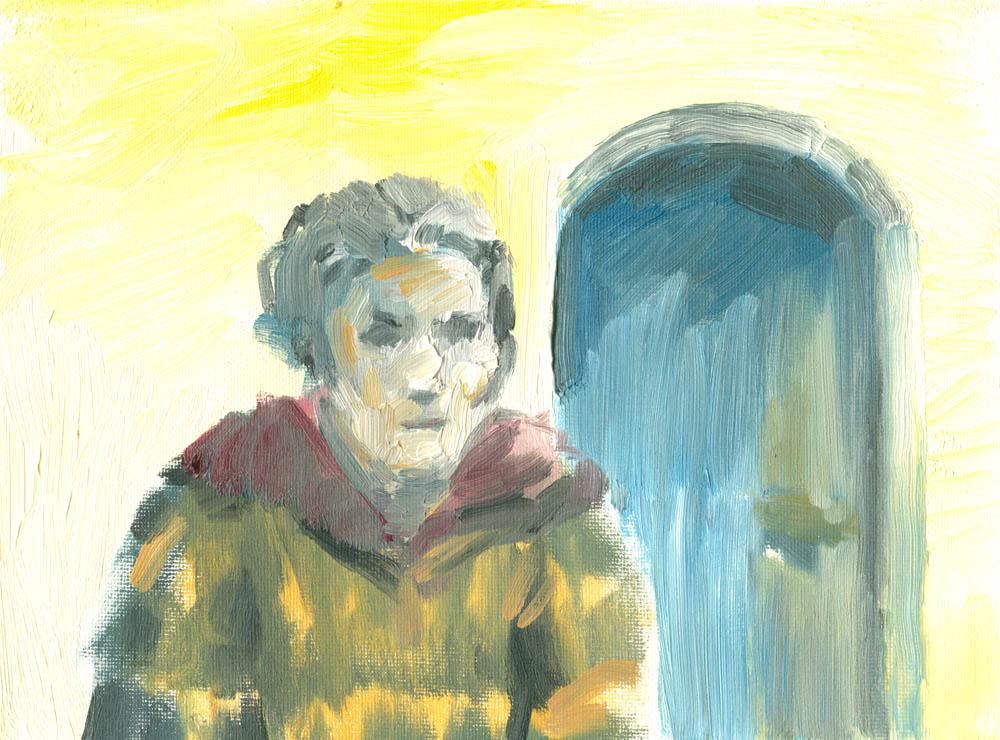
self portrait oil sketch

looking resolutely ahead; turning away from the void! oil on canvas, 6×8 inches

Some shadowy rather scary things have been happening of late. The blog has been neglected while I tangled with them. Before even an inkling of anything occurred I decided to paint a small self-portrait – just a quick sketch – of me turning my back on the void. There even seems to be evidence of a haircut in there, foreshadowing the fact that, feeling disturbed, I would soon reach for the scissors.

Another odd coincidence involves a picture painted while I was still at school, of myself cycling down the notorious Fleet Moss – a climb so steep that a cautious descent involved passing others who had chosen to walk down for fear of somersaulting over their handlebars. The point in the road captured in that painting was, many years later, the place where my chain snapped while struggling up the same climb, optimistically attempting to tow a trailer loaded with camping gear. Something had to give and it wasn’t going to be my legs so the metal sacrificed itself instead, throwing me instantly onto the tarmac.
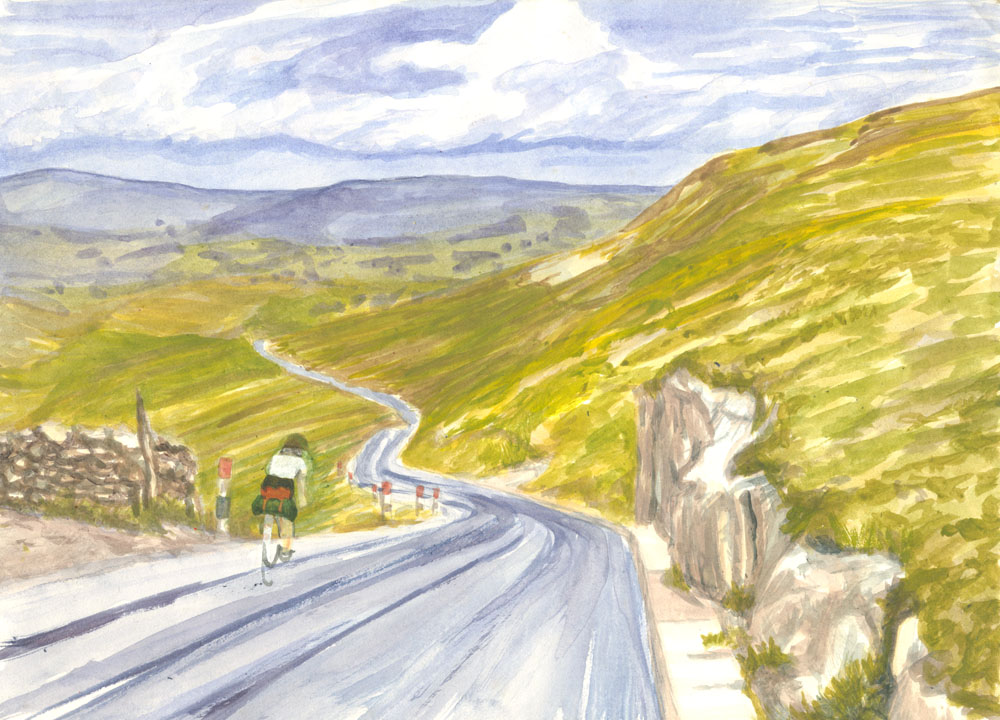
Fleet Moss painting on paper, A4, either watercolour or acrylics

painting of Fleet Moss – a dreaded hill in the Yorkshire Dales – picture probably created at around age 14 or 15

Did I know, all those years ago, that that spot high in the Yorkshire Dales on a terrifyingly steep bit of road was going to feature again in my life? Who knows? Something compelled me to paint that section of rearing tarmac.

It’s just as mysterious considering what draws artists towards those motifs that they become associated with forever, in the way that Mont Saint Victoire is synonymous with Cezanne. Why do certain scenes lodge in the brain, winkling their way into the psyche and why is it so much harder to paint well without that peculiar overwhelming instinct? Maybe some painters can manage it but I always find things flow much more easily when the subject itself takes over.

Are premonitions just coincidences? Even if they are, coincidences are strange things in themselves.

Therefore, how we explain coincidences depends on how we see the world. Is everything connected, so that events create resonances like ripples across a net? Or do things merely co-occur and we give meaning to these co-occurrences based on our belief system? Lieh-tzu’s answer: It’s all in how you think.

― Liezi, Lieh-tzu: A Taoist Guide to Practical Living

A certain man once lost a diamond cuff-link in the wide blue sea, and twenty years later, on the exact day, a Friday apparently, he was eating a large fish – but there was no diamond inside. That’s what I like about coincidence.

Vladimir Nabokov, Laughter in the Dark

Painting is more important than art

plein air oil painting with loose, free brushstrokes, 6x8 inches on canvas

sometimes when you’re outside the brushstrokes quickly flow, oil on canvas, 6×8 inches

This week the snow and ice returned, leading to winter activities such as huddling indoors, clinging to radiators and wearing hats. A further incentive to stay in was provided by the arrival of a new book: “What Painting Is” by James Elkins, bought with birthday money and full of strange (but true) ideas about painters and their peculiar obsession with moving smeary stuff around on flat things.

It is quite odd admitting to yourself that you have a fascination with smearing colourful greases about on pieces of material, and thinking that you could probably continue to find it incredibly engaging and interesting throughout life. Yet it isn’t really any stranger than other people’s passions (I hope). This week’s work seems to have taken hours yet not much change to show for it – but painting always seems to be one step forward two steps back (and then sometimes a big jump forward and you never know why).

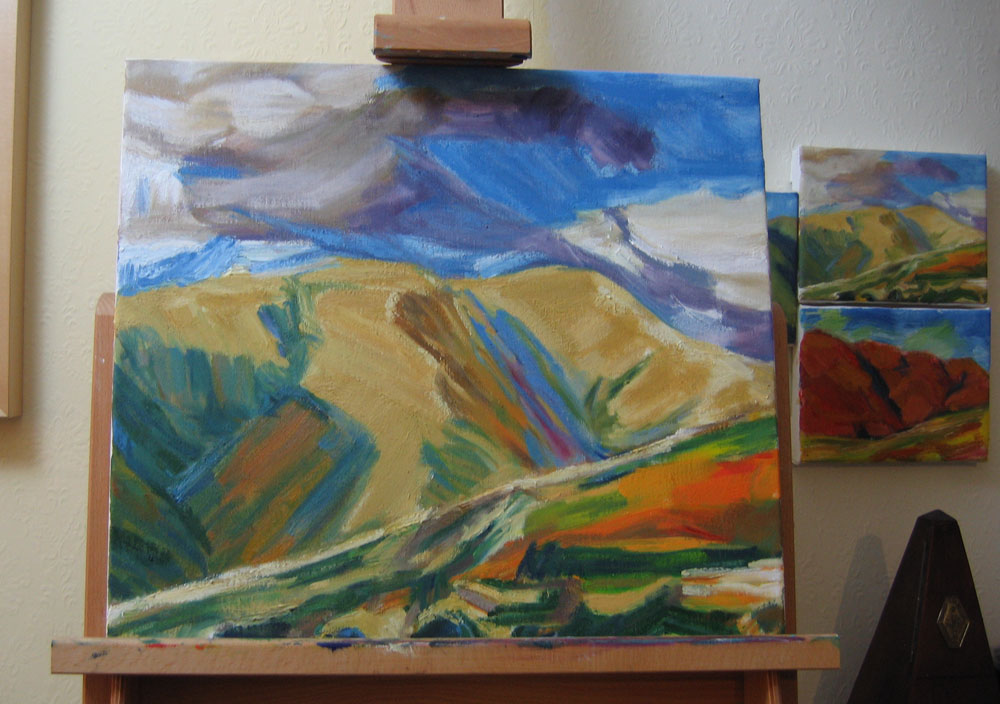
work in progress, Crosdale painting, oil on canvas

continuing with the Crosdale work in progress, trying to match the tones more closely to the original plein air

work in progress, Whitewell oil painting

starting to bring light into the dark Whitewell painting – something a bit ‘comic book’ about it at this stage

In his book, Elkins compares painting with alchemy, that weird mystical field that preceded science. I’m not so interested in that but more interested in the way he describes just how famous painters (Monet, Pollock and Rembrandt so far) put their paint on the canvas. For instance, Elkins is convinced that Monet stabbed at the canvas quite violently with his brush, which makes you think again when considering his peaceful, sun-dappled scenes of hay meadows and water gardens. I have read somewhere else that Monet said he painted slowly rather than fast, so who knows? I suppose he could have attacked the canvas determinedly with each stroke but taken his time between strokes as well.

Elkins also reckons that Pollock went to great pains to ensure his paint hit the picture surface in just the right way every time, so that anything that too closely resembled a recognisable shape (like a figure) was destroyed. The book points out the huge variety of different movements that Pollock must have made to create his abstract marks and, although I don’t get excited about his painting, I can appreciate that it works and that it was probably extremely difficult to get right.

oil portrait, 9x12 inches, work in progress

portrait, probably a work in progress if I can get the reluctant model to sit again, nose all wrong as usual …

It is really hard to make brushmarks that appear both random and pleasing at the same time. Having copied a couple of Nolde’s paintings and stared at many other pictures created by painters who can do ‘wild and free’ strokes, I can see that it is a process of being able to let go just enough but not too much. If you let go too much you can’t depict what you’re trying to but if you are too careful, trying to make sure your picture looks like it ‘should’, the brushmarks soon begin to look a bit leaden and all the same.

Working quickly helps. Sometimes painting out of doors, with the clouds whizzing by and the light altering by the second, means that brush hits canvas in a blur and, before you know it, a wonderful sea of lively marks has appeared. If you are lucky and have been practising a lot the painting works but, if not, you run the risk of ending up with a mess that doesn’t really look like anything – although the brushstrokes are nice.

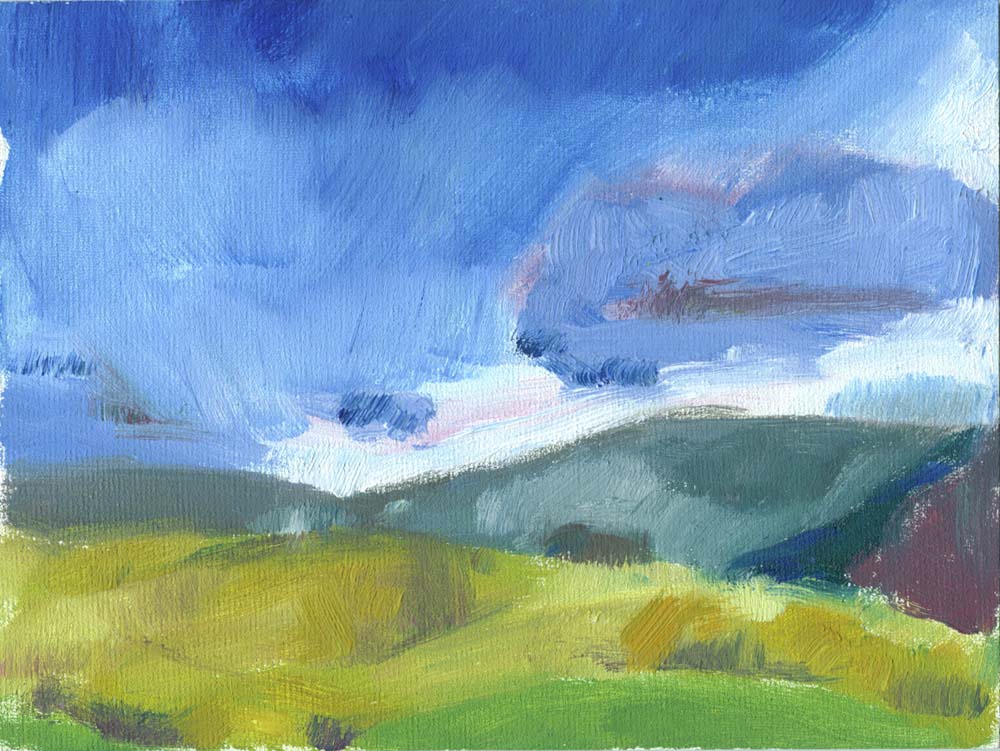
oil painting of stormy fell

I was very excited by the stormy light when I went out to paint this and the brushstrokes seemed to fall into place in a lively way but I’ve no idea why that day it worked, oil on board, 6×8 inches