Category Archives: plein air

Life on another planet: glowing red hills and waves of grass

golden evening light in Crosdale

the rare golden light that spills onto the hills just before dusk

This evening was the first one of the year that has been warm enough for me to sit on the hill and paint without hypothermia setting in. Even so, I’ve been trying to go and paint up there in recent weeks, putting up with the numb and freezing limbs that inevitably result. There is something so tempting about the last hour or so of golden sun that lights up the hills with a bright red glow. A recent conversation with a fellow painter from far away led to the revelation that my landscapes remind her almost of another planet. She doesn’t know this area though, and the fact that it sometimes resembles Mars, particularly when the red glow begins to brighten.

Having become an expert at hiding from the public while painting (I am unable to talk and paint and am envious of those who can – it seems a bit like patting your head and rubbing your tummy at the same time …) it may be difficult to spot the plein air painter’s kit, let alone the painter, in the immensity of the fells.
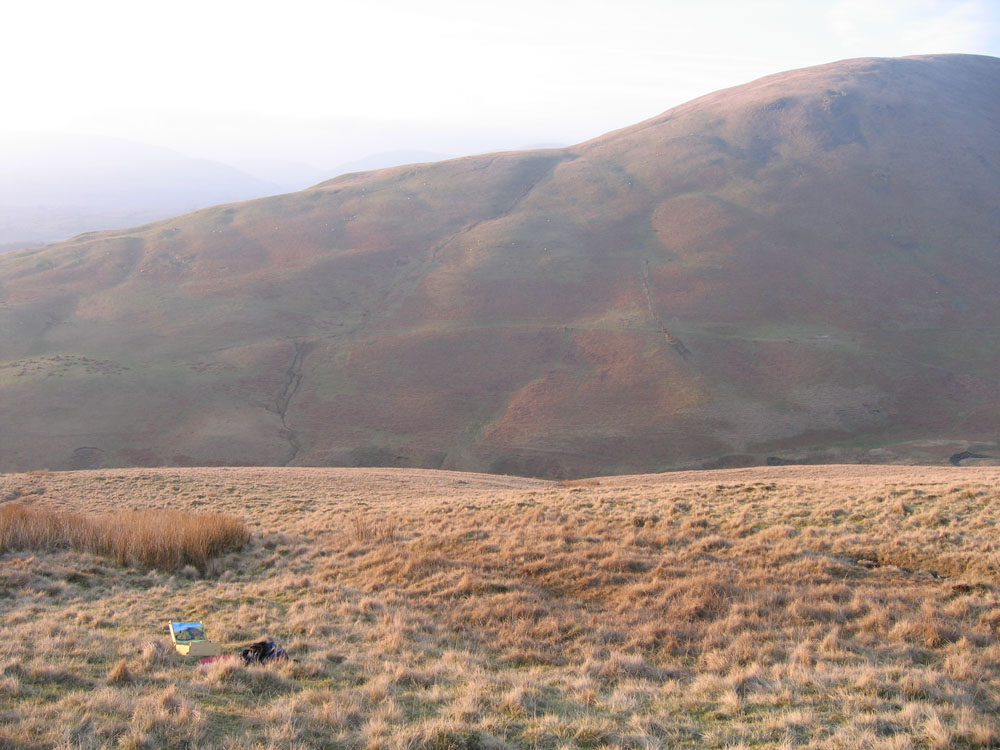
view of fells with plein air kit

where is the plein air painter?

plein air painter's pochade box on the hill

sneaking up on the pochade box for a closer look

On the evening when these photos were taken I had been reading a book about David Bomberg and, from looking at the illustrations for the umpteenth time, had realised that there was a similarity of process between his charcoal drawings and his paintings. I decide to paint as if I was drawing just to see what would happen and this picture was the result.

plein air painting

the painting in progress

I’ve added the next photo because Andi asked me why there are strange bleached-looking wave forms in the foregrounds of some of my paintings. I think you can see them in the photograph – they are particularly noticeable in front of the painting kit. These are the waves of pale, wind-blasted and sculpted, bleached reedy grass that translate into the more abstract forms in some of my landscapes, like the one below. Who knows, maybe no-one else can see them but me??

plein air painting in the hills, waves of grass in foreground

waves of wind-sculpted sun-bleached grass in the foreground
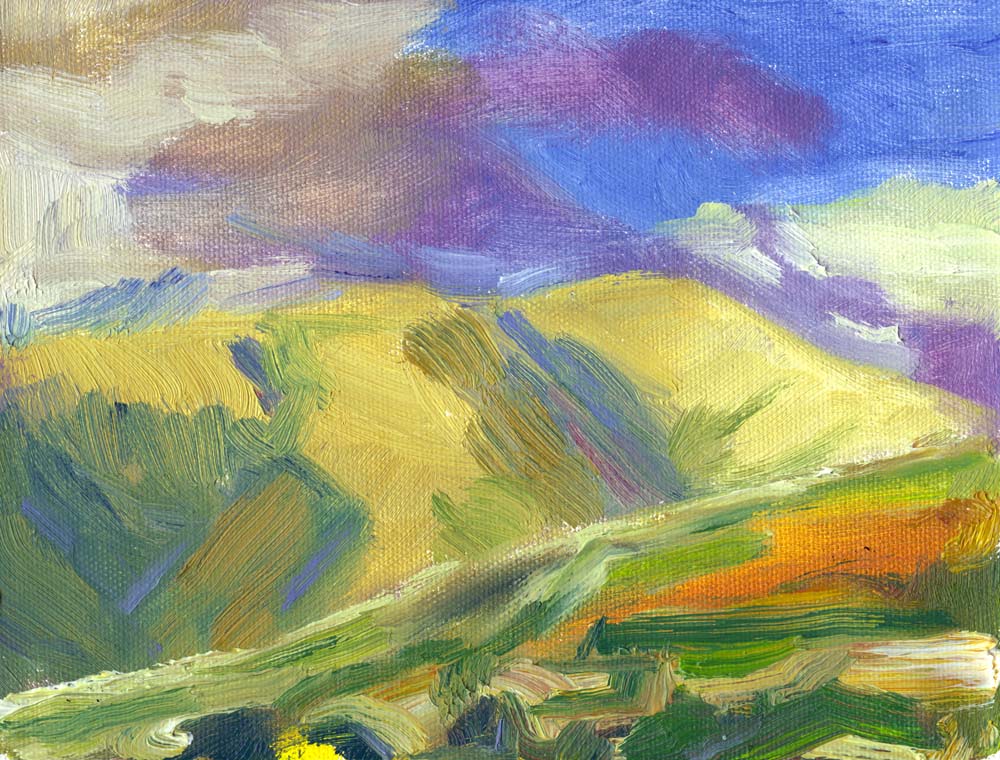
evening light on Crosedale

evening colours fall on Crosedale, oil on canvas plein air sketch, 6×8 inches

Out on the hill, as the painting comes to its conclusion, there is always enough light left to enjoy being alone in the stillness, with just birds (and sometimes curious sheep) for company. Then the day starts to disappear, mist drifts in from the sea and it starts to get cold. It’s time to move.

mist rolling over the hills at dusk

as light fades the mist rolls in

Disappearing palaces, tempestuous landscapes and lemon squeezers

image showing three books

two Christopher Lehmpfuhl painting catalogues and a book about Emil Nolde’s watercolour landscapes

It might be cold outside but there has been a simmering of wild colours and stormy brushstrokes within. More late birthday gifts arrived in the form of two new catalogues of Christopher Lehmpfuhl’s bold and dazzling work and a small but sumptuous book filled with Emil Nolde watercolour landscapes. Both German painters, but separated by time.

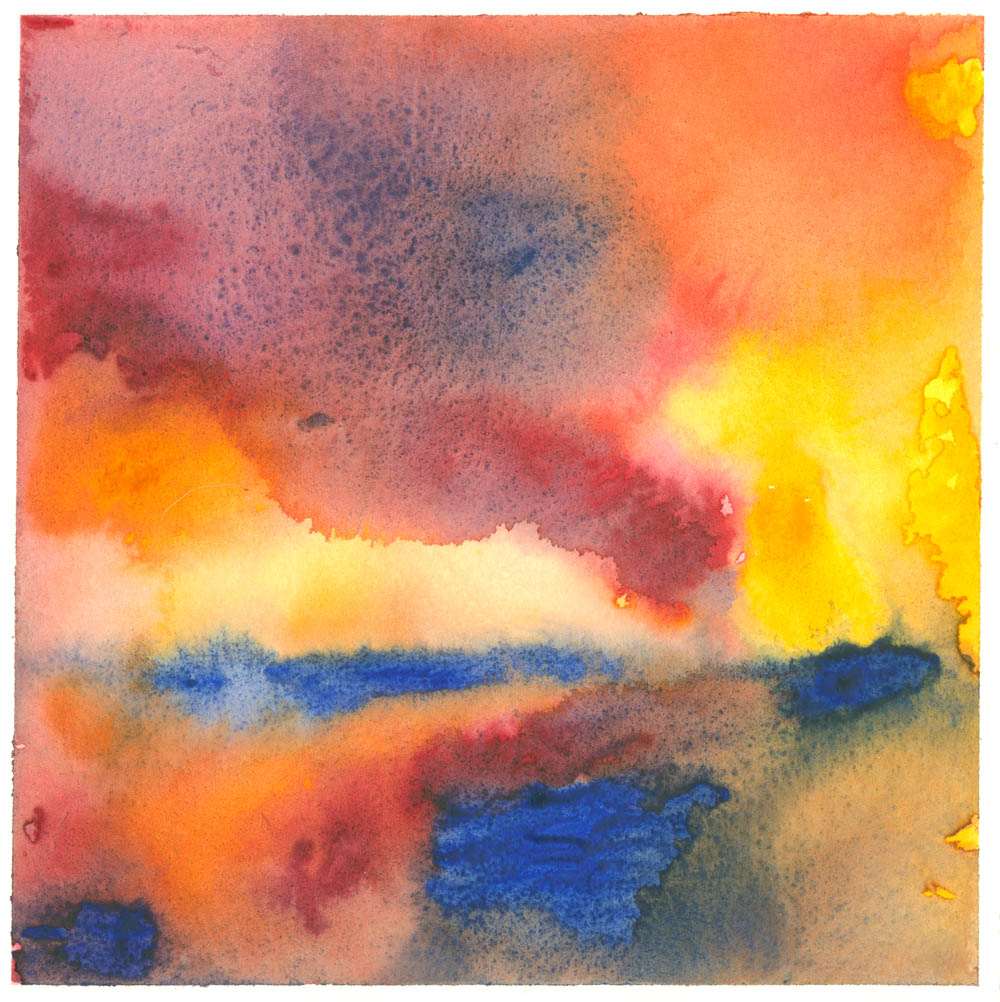
image showing colourful watercolour

wild watercolour number 1, 10 inches square on Arches paper

The Nolde book is very inspiring and propelled me towards my watercolour tubes and pans, resulting in some enthusiastic and richly-hued daubs. I still can’t work out how Nolde achieved such dense, strong colour. Maybe it was the particular shades he chose to work with and maybe he created numerous layers. The more ‘stainy’ colours I used held up relatively well but the others did what watercolours often do – looked vivid while wet but faded to a whitish glow on drying.

watercolour, 10x10 inches on Arches paper

watercolour attempt number 2, 10 inches square on Arches paper

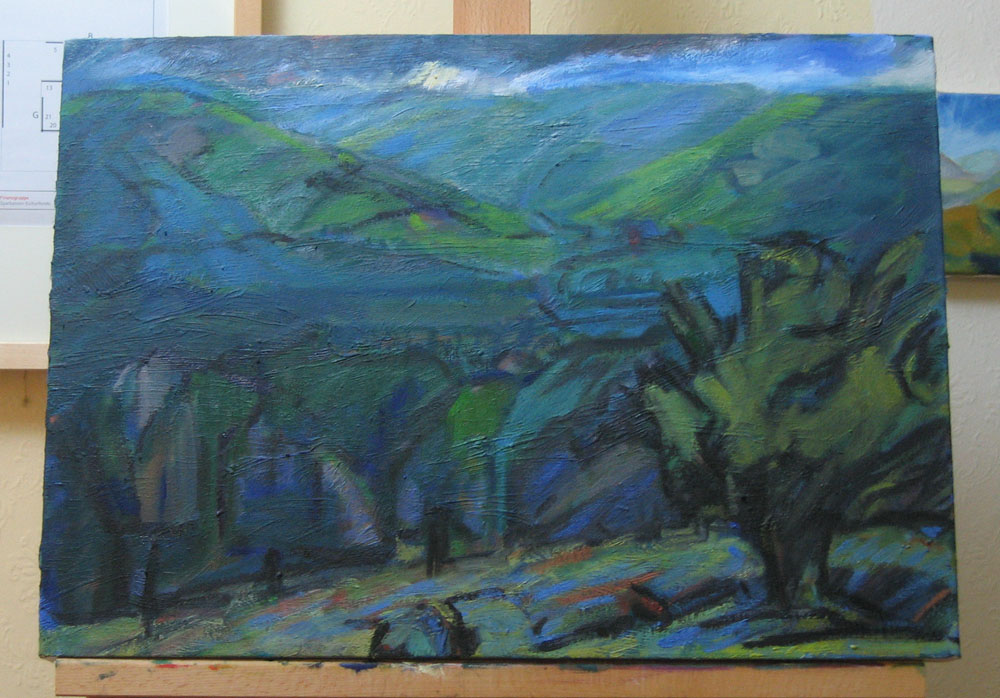
I have done some more work on the Crosdale large painting and, while I’m pleased with the colours, it’s still not quite there yet.

oil painting of Crosdale, work in progress

large Crosdale painting, work progressing slowly, oil on canvas

At the opposite end of the brightness scale, my odd dark painting is still progressing towards its rather spooky finished state.

A2 oil painting on canvas, Whitewell painting

seems it’s always dark near Whitewell, work in progress, oil on canvas, A2

Lehmpfuhl catalogue showing still life paintings and window views

the joy of small scenes in the Lehmpfuhl catalogue

One of my Christopher Lehmpfuhl catalogues is full of intimate still lifes: views through windows and portraits of tables loaded with glasses, crockery and other small items. It gave me an idea to have a go at capturing a ‘family’ of glassware grouped on a table top.

6x8 inches still life of glassware, oil on canvas

still life glassware family group, two tumblers and a lemon squeezer, 6×8 inches, oil on canvas

As the evenings have been getting longer I also managed to paint a very quick view out of the kitchen window as the light was beginning to fade. It was a real rush to get it done, especially as a stray dog appeared wandering through the gardens below while I painted, leading me to break off and check that it had not been abandoned, but it could lead to further paintings as I enjoy the odd shapes of the hills and the trees and their associated shadows.

oil painting on canvas, 9×12 inches, window view

extreme painting, through the window in record time, oil on canvas, 9×12 inches

Christopher Lehmpfuhl catalogue: Die Neue Mitte

Die Neue Mitte exhibition catalogue, brimming with energetic paintings

The larger of the two Lehmpfuhl catalogues is full of thrilling, swirling, huge plein air paintings from an exhibition called ‘Die Neue Mitte’. The series of paintings was created to document the controversial, politically-motivated demolition of an East German landmark building in Berlin, the Palast der Republik, which was open to the public as well as being the home of the DDR parliament and the people’s chamber, or Volkskammer.

It was a place where cultural events took place, with a theatre and art galleries as well as a disco, restaurants and even a post office. As the Palast was gradually torn down Lehmpfuhl kept finding new angles to paint it from and the whole extraordinary process was documented in a film which can be found halfway down this page, entitled ‘Die Neue Mitte’.

I saw the Palast der Republik on my first visit to Berlin in 2001 and it had a real 70s look to it, with its bronze mirrored exterior reminding me of glittery disco interiors and dark smoked coffee tables made of glass. Another short film, about the opening of the Palast in 1976, can be found here.